Version History
Evolution of the GOXMO AI Interface Project
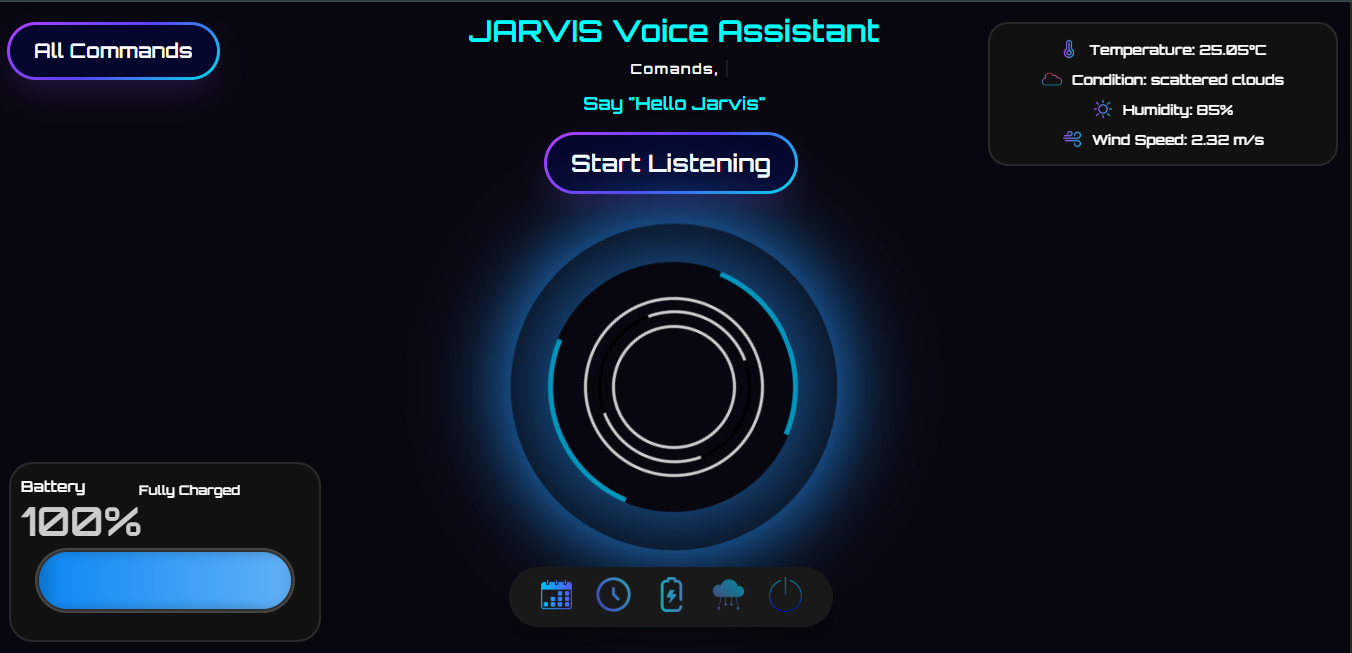
JARVIS v1.0 — The Beginning
Legacy Release • Initial Prototype
Core Features
Basic Voice Recognition
Simple browser-based command detection
Text-to-Speech Responses
Basic browser-generated voice output
Weather Lookup
Basic API-based weather display
Time & Date Announcements
System time reporting
Basic UI Panel
Static interface with minimal styling
Manual Command Activation
No automation or personality system
Limitations
Version Summary
JARVIS v1.0 was a foundation experiment—functional, but simple. No hologram effects, no futuristic interface, and limited automation.
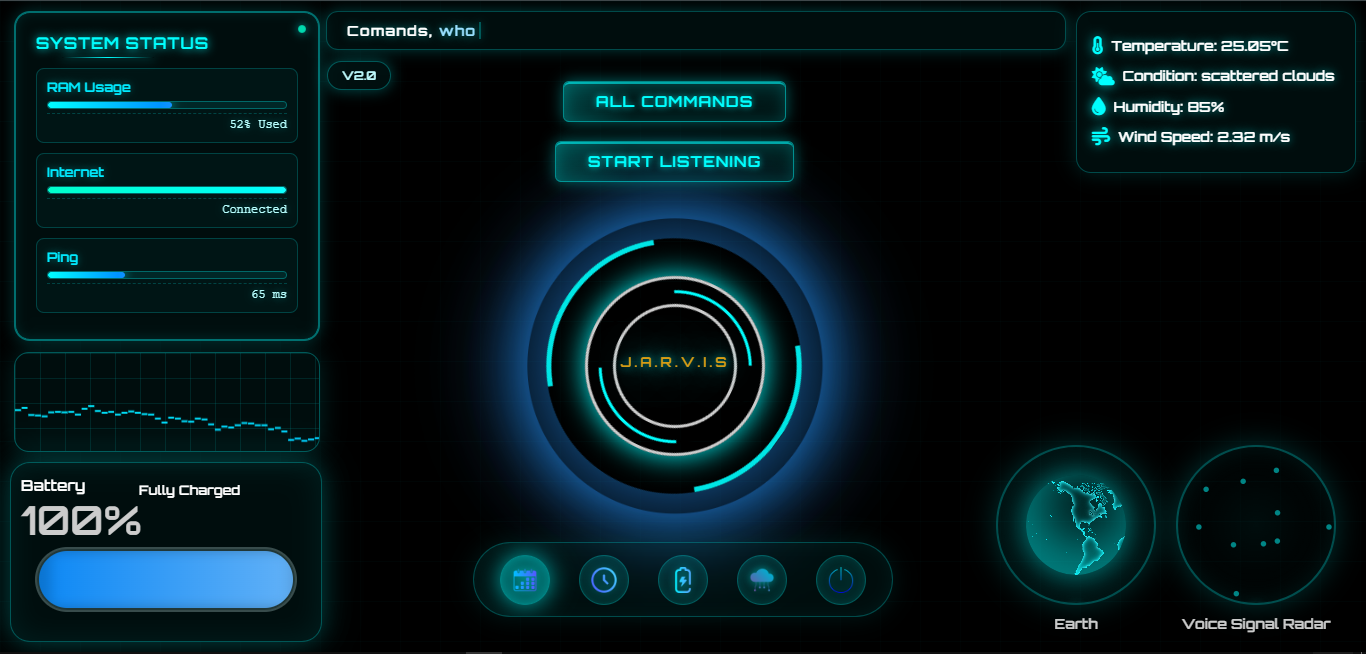
GOXMO v2.0 — The Advanced Interface Upgrade
Current Version • Latest Stable Release
Major Improvements
Fully Redesigned UI
Iron Man–inspired futuristic interface design
Animated Elements
CSS and JavaScript-based UI animations
Better Voice Engine
Improved browser voice command handling
Multi-Page System
Modular website architecture
Smooth Animations
Optimized transitions and visual effects
Faster Response
Improved UI responsiveness and logic flow
New Functional Modules
Voice Commands 2.0
Enhanced browser voice commands with predefined phrases and response logic
Audio Recording System
Browser-based audio recording using media APIs with playback support
GOXMO Alert System
Smart system alerts generated using browser APIs to notify the user about battery status, offline connectivity, and system conditions through visual warnings and voice notifications.
Satellite & Map System
Map-based visualization using public satellite and weather data APIs
Hologram UI Engine
Advanced visual simulation using animated rings, glow effects, and layered UI elements
Media Integration
External service integration via embeds and redirects (YouTube, Maps, web tools)
Location Services
Browser geolocation access with permission-based location display
Technical Specifications
Version Summary
GOXMO v2.0 represents a major step forward in AI-inspired interface design and interaction—combining cutting-edge visuals with powerful functionality for a truly futuristic experience.
Evolution Statistics
Future Roadmap
Enhanced AI Learning
Planned learning logic improvements
Augmented Reality Mode
Conceptual AR interface experiments
IoT Integration
Future IoT exploration (research stage)